From a planning signal to a useful shortlist
A planning application can help you identify a project to investigate. The useful work is deciding whether it fits your business: where it is, what is proposed, which stage is recorded and what you still need to establish.
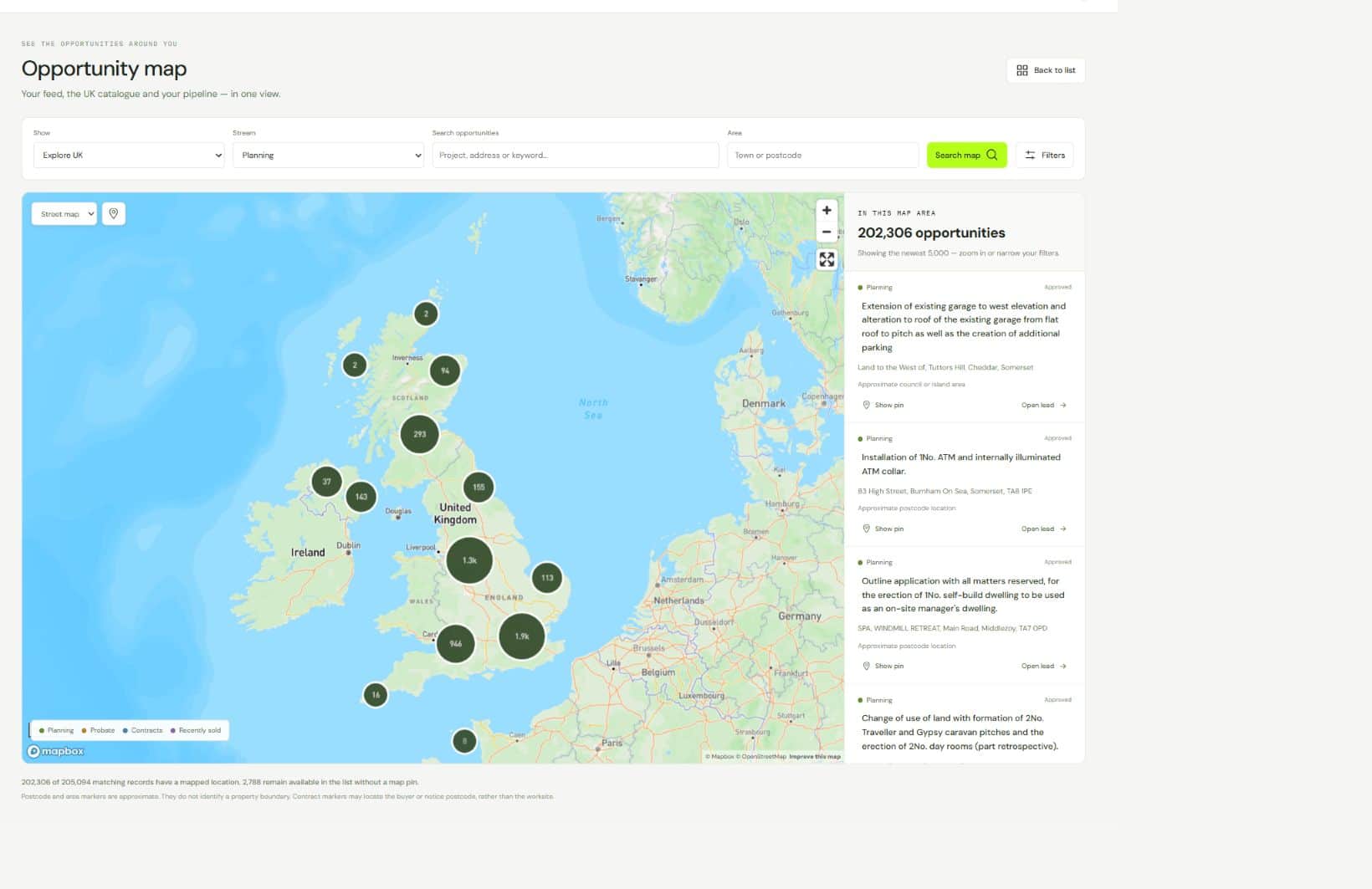
Planning Data Hub helps you search and filter available records, inspect source details and organise opportunities. A planning application does not establish that work is available, that funding is in place or that an owner is looking for a builder.
1. Research the original source
Start with your service area and the kinds of work you can deliver. Use the map and available filters to narrow the records, then open relevant results and check the source details. Record the application reference, what is proposed, its published stage and the date you checked it.
Read the original council record when available. A description or status is a starting point; check the supporting information before drawing conclusions about the project or its timing.
2. Qualify the fit
Compare the proposal with your working radius, project experience and capacity. Keep evidence separate from assumptions. An extension may suit your team, but its budget, start date and buying route can still be unknown.
For example, a local extension that matches your usual work could be worth monitoring while you clarify timing. A similar project outside your service area may be a decline. Both decisions save repeat research when you record the reason.
Use the free planning-lead qualification checklist to structure that decision, whether you are evaluating the platform or refining an existing process.
3. Keep the next step in your private pipeline
Organise shortlisted opportunities in your private pipeline. Keep a clear decision and a specific next research action in your team workflow, then revisit the evidence when a record changes or an unanswered question needs checking.
A useful shortlist contains enough context to explain why a project deserves attention. It is a research queue, not a forecast of won work.
Who this workflow suits
- Builders and trades: research proposals that match your location and type of work.
- Suppliers: investigate the scale and nature of a proposed project before assessing whether it fits your products.
- Developers and property professionals: organise public planning and property signals for further investigation.
The wider workspace also includes probate records, public contracts and sold-property data. Choose the stream relevant to your research; these records answer different questions and need their own source checks.
Check the coverage that matters to you
Coverage and freshness vary by source. Before subscribing, use a walkthrough to discuss the areas, record types and fields you need. Check available dates and original source information as part of each research decision.
Our September 2026 catalogue coverage snapshot explains the records we hold, date completeness and examples of variation between areas.
The service supports business research. A published record does not confirm buying intent, a contact route or a construction start date.
Monthly plans for one business
- Core: £279 + VAT per month, one business, 1 named user.
- Professional: £495 + VAT per month, one business, 3 named users.
- Elite: £995 + VAT per month, one business, 5 named users.
AI-assisted letter drafting and shared shortlists are included only in Professional and Elite. Review and edit every draft before use.
Use Planning Data Hub in your web browser. Compare the full plans and current details on the pricing page.
See whether it fits your business
Book a walkthrough with a service area and a project type in mind. If you are ready to choose a plan, get access to Planning Data Hub.
For more research guidance, explore our planning-lead articles.